Indian food is often misconstrued as being too hot, which is ironic considering chillies are not even native to the country. Instead, what makes Indian food distinctive is the use of a host of spices, both as flavouring agents and for their curative properties. It is even more fascinating to note how these spices differ across regional cuisines in the country.

Spices and India are interwoven through centuries of shared history. They are akin to a long-lasting relationship which may have had its trials and tribulations but in the end, the two partners are imprinted on each other’s soul. But how did this romance begin? To answer that seemingly simple question, one has to peer back into the ancient history of the Indian subcontinent.
India and the borders within which it is now confined is less than a century old. Yet, this ancient land traces its history back to tens of thousands of years, when cavemen inhabited the earth. More recently, one of the world’s three earliest civilizations along with Mesopotamia and Egypt, the Indus Valley Civilization left behind traces of well-planned cities that flourished around 2500BC. The journey from then until now was fraught with wars and occupation by different rulers, some homegrown, others coming from lands as far as Mongol, Persia and even Britain and France.
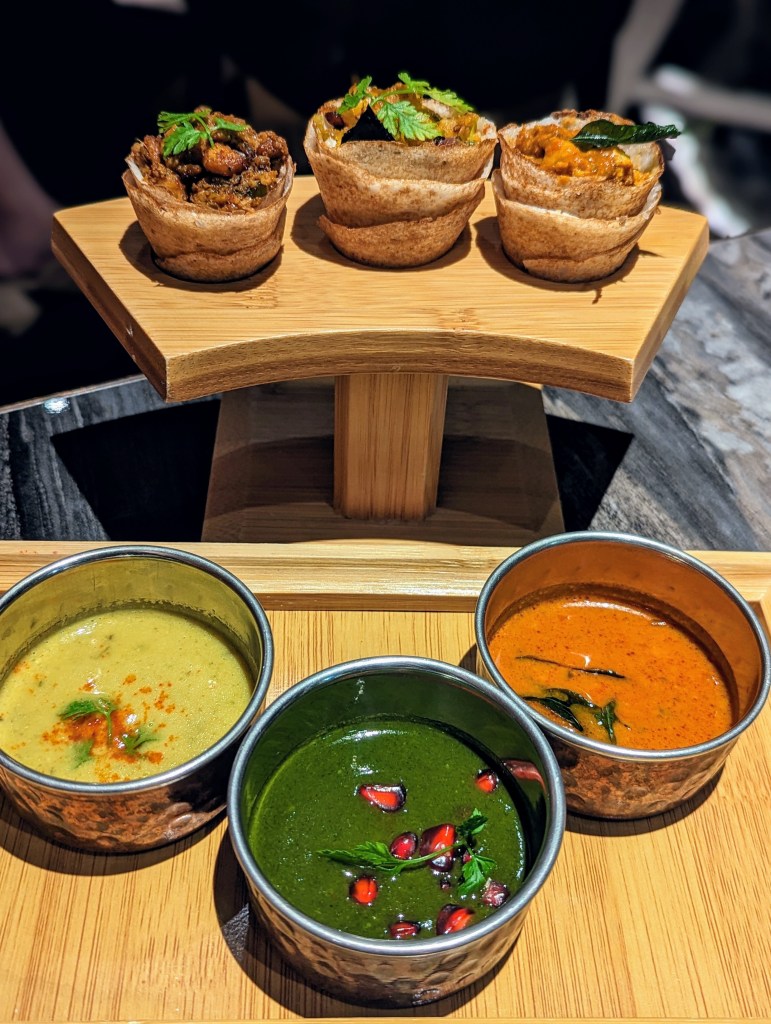
With a history as colourful as that, the cuisines of India inevitably underwent numerous transformations, adapting and evolving with each era. The very belief that ‘Indian food’ is (and has always been) hot and laden with chillies is a common misconception, given that red chillies were only introduced to India 450 years ago by the Portuguese.
An unknown flavour profile to the inhabitants of the country, red chillies found their way to Indian shores presumably from Brazil thanks to the Portuguese fleets of Vasco da Gama. Chilli doesn’t find mention in ancient Indian texts, and the first one hears of it is in the poems of South Indian composer Purandaradasa (1480-1564 AD), according to food historian K.T.Achaya as mentioned in his book The Illustrated Foods of India A-Z. Spices, however, have been flavoured Indian fare since time immemorial. If you visit any Indian household, you will invariably find two things—a round, steel spice box and a grinder (be it a stone tablet or a mortar and pestle).
Indian food is ‘spicy’, but not in the linear manner of heat as it is widely understood. Any dish originating from India will use an array of spices to give it a distinct flavour, not merely the mouth-numbing heat afforded by red chillies. But before one ventures into the history, usage and prominence of different spices in the country, it is important to note that there is nothing called ‘Indian food’. Better identified as foods of India, the cuisine is far more varied than the butter chicken, dosa and naan that people associate with the cuisine.
Cuisines of India
It is said that the cuisine changes every 20km as you traverse the country. On a simplistic level, one may divide the country into north, south, east and west, but the regional cuisines within each section are further divided by state, and then by community. Secular India is home to communities ranging from Jains, a vegetarian sect that does not add onion and garlic to the food for their supposed aphrodisiac properties, to the Parsis who love meat so much that they add it to their lentils as well, flavoured with cinnamon, cardamom and nutmeg. Religion, colonial occupation, geographic location and soil all play a large part in defining the cuisine.
North India
On a macro level, one may be able to distinguish between the regions of India based on the predominant spices found in the food. Kashmir on the very northern tip of the country has a variety of cuisines but asafoetida (heeng), fennel seeds (saunf) and dried ginger powder (sonth) find prominence in most dishes from the region, both in Muslim homes and the kitchens of the Kashmiri Pundits.
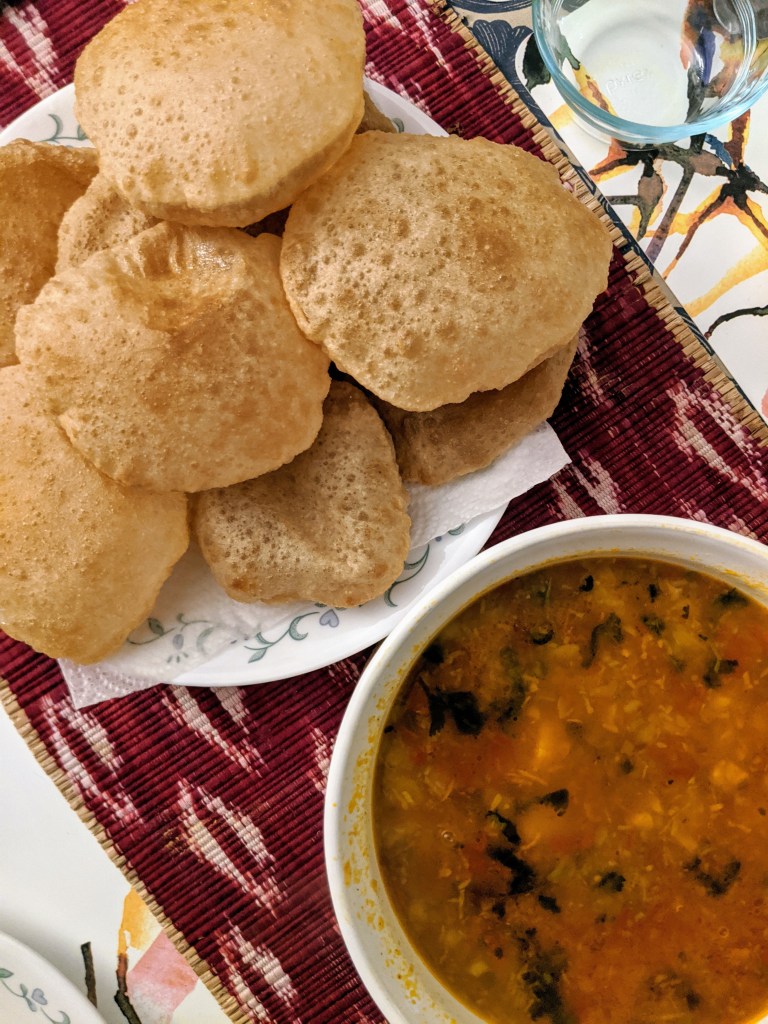
Punjab, where a lot of the curries popular in Europe come from, flavours its food with a paste or masala of ginger, garlic, onion and tomatoes tempered with cumin, choosing to add a spice mix loosely called garam masala right at the end. Literally translated as ‘hot spice mix’, garam masala is rarely store-bought. Its composition changes across the country, and it may include any number of spices such as cardamom, cinnamon, black pepper, cloves, nutmeg and cumin amongst others. The spices used and in what proportion, is a secret every family guards with zeal. There are few similarities to be found between the garam masala of different households, except for the fact that it is probably homemade, ground in reasonably large quantities by the matriarch and then distributed amongst the extended family.
West India
The western states of Maharashtra and Gujarat barely have commonalities when it comes to cuisines despite being neighbours along the coast. The one spice that finds prominence in Gujarat is turmeric (haldi), one of the few spices indigenous to India. Similar in colour but meteorically more expensive is saffron—one of the costliest spices in the world, which is used generously by the very wealthy Vaish and the Marwari communities across Gujarat and Rajasthan. Gujarati fare has a common misconception of always being sweet, even though vegetarianism may be a more fitting generalisation. The cuisine uses cumin seeds quite liberally, with mustard seeds seen in one-off dishes such as the steamed chickpea cake called dhokla. On the other hand, fenugreek seeds are liberally used in Rajasthan, helped by the fact that the state accounts for 75% of the country’s production.
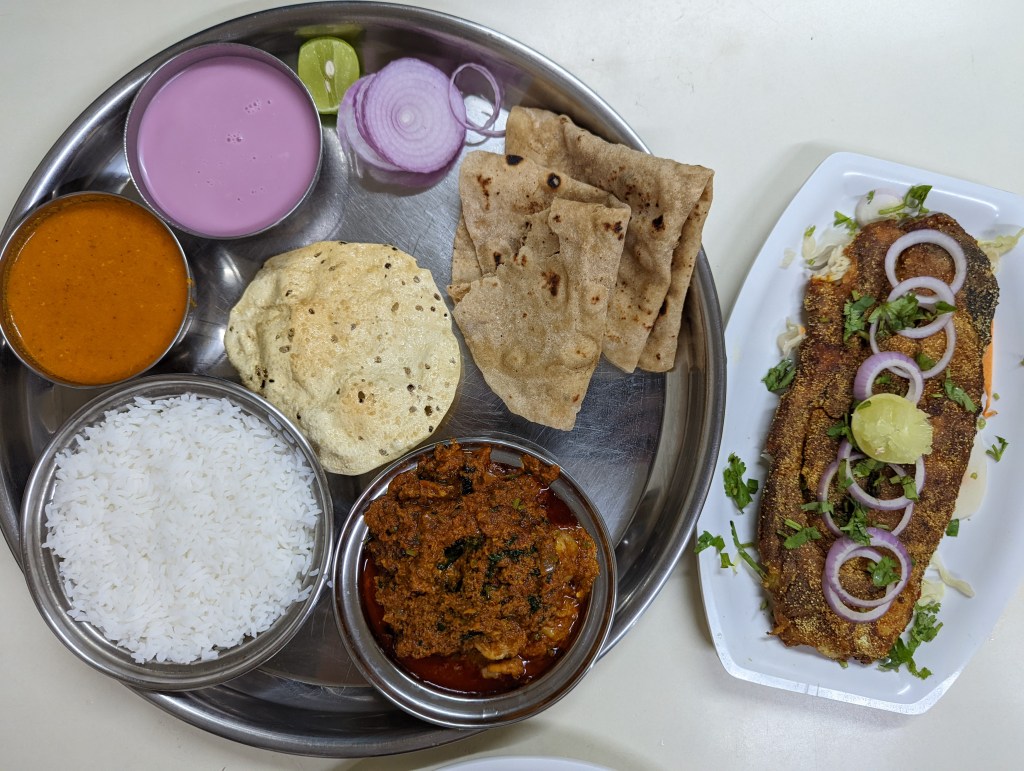
Maharashtra finds itself using ample amounts of souring agents such as kokum and tamarind, shares Singapore-based chef Milind Sovani whose new restaurant Masalaa Bar serves up regional Maharashtrian favourites such as vada pao and Konkani thali. Kolhapuri fare within the state is an example of India’s new-found love for red chillies. This fiery cuisine is also unique in that it uses a species of lichen named black stone flower or dagad phool as spice as well as mace, the delicate red coating around the nutmeg seed.
The coastal Konkan region that hugs both Maharashtra and Goa uses a spice that closely resembles the Sichuan peppercorn called teppal or triphal. Distinct for their mouth-numbing sensation, the berries are added towards the end of preparation, after removal of the seed. Without this tiny spice, Konkani food cannot be replicated anywhere in the world.
East India
The north-eastern states of India remain woefully under-represented in their cuisine, within and abroad. Due to the topography and inaccessibility, food from here doesn’t rely heavily on spices, rather on a variety of techniques to produce a combination of textures. Foods are often fermented or dried, presumably to elongate their shelf life. Sesame seeds are a favourite ingredient here.
Chef Thomas Zacharias, former executive chef of the acclaimed restaurant Bombay Canteen made it his life’s mission to travel to far-flung areas of the country to try their cuisines and bring these dishes back to Mumbai to be served to an ever-willing crowd. On his trip into north-east India, he noticed that dishes in Assam and Arunachal often used the burnt ash of banana stem to season their dishes instead of salt. Necessity is the mother of invention, as they say.

The only cuisine that seems to have travelled out of the north-east is from West Bengal. Mustard is prominent in Bengali food, as a cooking oil as well as in its seed form. The dishes that use mustard seeds insist that they be pounded rather than tempered to release the oils, unlike the rest of the country. Bengal’s version of mustard sauce, the pungent kashundi, makes a great table condiment.
Renowned food writer Marryam H Reshii in her book titled The Flavour of Spice notes that the Ghoti community from West Bengal uses poppy seeds almost obsessively, despite government restrictions limiting its production to the area of Neemuch in Madhya Pradesh. Like mustard, poppy seeds are also soaked and ground before they are used, she mentions, though the latter is restricted to vegetarian preparations in the cuisine.
South India
The four states of Tamil Nadu, Kerala, Karnataka and Andhra Pradesh are often collectively referred to as south India, especially by people residing in other parts of the country. The cuisines from each state, however, couldn’t be more different from the other.

The Malabar Coast of Kerala and the lush hills of Tamil Nadu are the main spice-growing regions of the country, responsible for attracting Arab traders from the 7th-15th Century AD. The traders would take these treasured spices, at that time more precious than gold, and sell them to the far shores of Europe and elsewhere. To maintain the mysticism around the spices, and to discourage European explorers from seeking spices on their own, they would often spin tales of dragon-protected forests and cinnamon nests created by rare birds.
The various cuisines of Kerala share certain characteristics. Their use of black pepper is all-pervasive ranging from stir-fries to curries and even the tangy rasam soup served with almost every meal. Neighbouring state Tamil Nadu boasts of a vast range of cuisines such as the meat-heavy Chettinad and the pure vegetarian food of Tamil-Brahmins. Chettinad food uses a combination of fennel and cumin to get a distinctive flavour and dark hue. Meanwhile, the use of mustard seeds in tempering is seen consistently across the south Indian states, where they are often accompanied by curry leaves.
Oil as a medium
Though an attempt may be made to categorise regional Indian dishes based on the predominant spices, or the combination of spices used to flavour them, it is often a futile exercise, given the complexity of Indian cuisines. Michelin-starred chef and restaurateur Atul Kochhar, who proclaims it has been his “life’s work to decipher this complex matrix” disagrees that spices unite or divide India. He explains: “I have now come to the understanding that it is the medium or the oil that makes all the difference in regional cuisines of India. If you temper the same spice, say cumin, in ghee used in north India, mustard oil used in Bengal and coconut oil used in the south, you will find that the spice reacts differently. This is because each oil has a different smoking point when the spice can release its own oil into the medium, which goes on to flavour the dish.”
Whether it is the combination of medium and spices that differentiate regional Indian cuisines, or the proportion of spices used in spice mixes such as garam masala, paanch-phoran or podi, what remains astounding is the sheer variety and complexity of food across India. A collection of cuisines grossly under-represented by the few dishes that have travelled globally, and largely misunderstood as being too fiery, India has much more to offer beyond the familiar curries and thosai we may find at every hawker centre in Singapore and elsewhere.
Originally published in Wine & Dine Magazine, Singapore
 Life In A Million Bites