In the summer of 2023, I took a sabbatical from work and flew away to Paris, in pursuit of something intangible. There was a hunger in me. A hunger to learn something new. Do something different. So, I searched far and near, looking for an appropriate course. And then I remembered a course that Rashmi Uday Singh had enrolled in, just a few years ago. A Diploma in Gastronomy. Advanced Studies in Gastronomy at none other than the Mecca of food – Le Cordon Bleu Paris. It sounded just perfect. So, I sent in my application and waited with bated breath.
When my acceptance came in, I was elated. Conducted at Le Cordon Bleu institute itself (in French, with simultaneous translation), I would spend half my time in Paris, and half in Reims, the capital of the Champagne region of France. And so, I packed my bags and set forth towards the unknown. Exciting times lay ahead.

I’ll write about the course another time. It will take far more than one post to cover the entire experience. But for now, I wanted to share some of my key takeaways about cheese and wine with you. Some of these were a revelation. Despite 12 years of being a food writer and editor, I loved the fact that they could still surprise me.

12 Amazing Facts About Cheese & Wine
If you love cheese and wine as I do, you’ll love these too.
- Dairy – It is not cheese if it is not made with dairy milk. Oat milk, almond milk and whatnot may be on trend but for a product to be called cheese, it must be made using dairy. Goat milk, cow’s milk and sheep milk are all used for various types of cheese.
- Wine & cheese pairing – Cheese pairs best with white wines, rarely with red. Read that again. It’s true. The cheese expert at Cordon Bleu Paris and the head sommellier both agreed on this point. Alas, all these years that I have served a cheese platter with my full-bodied reds!! Meanwhile, Roquefort or a strong blue cheese should be served with a sweet wine.
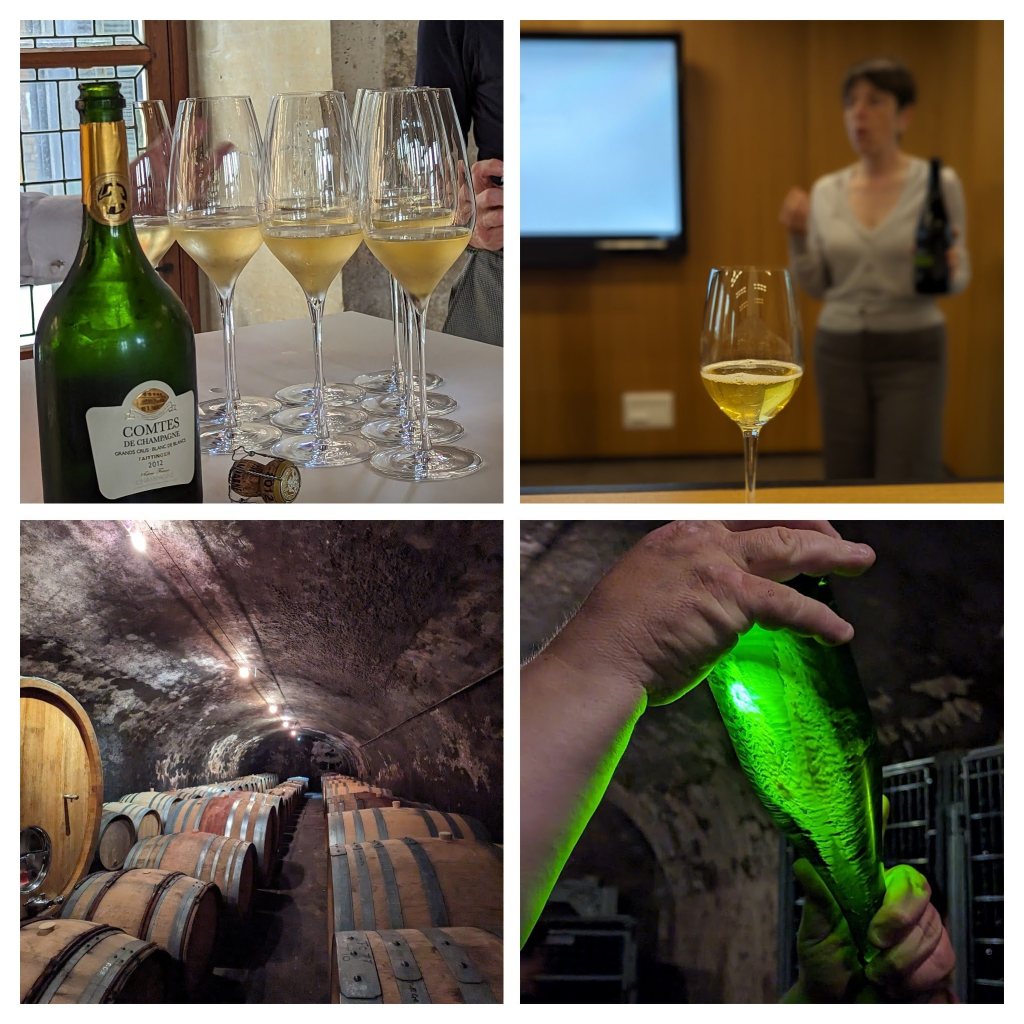
- Champagne glass – Do you know that the worst glass for drinking Champagne is a flute. The flute is merely a marketing gimmick, much like how Champagne is associated with celebrations. The best glass for Champagne is tulip shaped, so that the carbonite bite dissipates before it hits your nose.
- Cheese PDOs – The cheeses which are referred to as Protected Designation of Origin (P.D.O.) derive from a certain area and their quality is related to the specific environment of origin. They are produced, processed and prepared in a given geographical area, from a given kind of milk, using recognised know-how. France has a total of 46 PDOs for cheese including my favourite blue – Bleu d’Auvergne, and the ever-popular Comté which I personally don’t care much for.
- Sipping Champagne – Despite what the advertisements tell you, do NOT sip your champagne as soon as it is poured. Place your glass on the table and take a walk. Wait for the foam to settle down. And then take a sip. If you immediately bend your head to take a sip, your nose will get irritated due to carbonic bite (the glasses released by the bursting air bubbles). Not a pleasant experience. It takes away from the taste of the Champagne itself.
- Wine tasting – When wine tasting, always come back to the first glass after the last one. This is because the flavour of anything in your mouth is actually the substance interacting with your saliva. When you sip the first glass, there’s not much saliva in your mouth. By the time the last glass comes around, saliva is abundant and you can taste the wine as the maker intended it.
- Origins of cheese – It’s interesting to note that cheese was invented as a way to preserve milk. In olden times when there were no refrigeration techniques, preservation methods such as cheese-making ensured that dairy could be stored in some form for long periods of time.
- Wine & food pairing – When pairing a wine with your food course, remember that low-salt, high-fat dishes should be served with tannic wines. Fat lessens the astringency of tannins, and conversely tannins prevent fat from seeming too rich.
- White vs red – Another fascinating fact is that the only difference between white and red wine sometimes is the skin of the grape used. For example, Pinot Noir grape is used to make red wine and champagne both. While its red wine retains the skin, removal of its skin while making Champagne ensures that it remains white.
- Pop the cork – Beware when you pop open a bottle of bubbly. The built up pressure inside a Champagne bottle can make the cork fly out at 60km/hr. That’s fast enough to get seriously injured.
- Fine line – Though some people think that fine bubbles mean fine Champagne, that is not necessarily true. The size of the bubbles don’t decide the quality of the Champagne by themselves.
- Wine caves – Have you ever wondered why wine is stored underground in wine caves? When I visited Reims, I was told that the entire town has an intricate network of wine caves buried deep within. 250km of winding caves, under a town that is merely 46sq km big. What’s more fascinating is that these caves were originally dug up by Roman slaves as chalk quarries. When the chalk ran out, the residents realised that these were perfect to reuse as wine caves with 98% humidity and temp of 10-12°C all year round. Wine fridge without the refrigeration!
 Life In A Million Bites