Vietnam has been a firm favourite and despite my attempt not to repeat countries on our travels, we found ourselves visiting different parts of Vietnam over the years. From the French influences in Hanoi and the limestone karsts in Halong Bay to the white sands of Phu Quoc and the quintessential charm of Hoi An, Vietnam has managed to keep pulling us back time and again.
Though the food may have something to do with it, and I’ll save that for another post about a street food tour I did on my recent trip, this post is about something else. For the long weekend, we packed our bags and headed to Ho Chi Minh City or erstwhile Saigon. When we mentioned this to any of our friends, they looked at us quizzically. Why HCMC, they wondered. It is but another busy city, full of traffic, chaos and yes, a splattering of cafes. But what motivated us to book this trip was a destination an hour outside of Saigon, not the city itself.
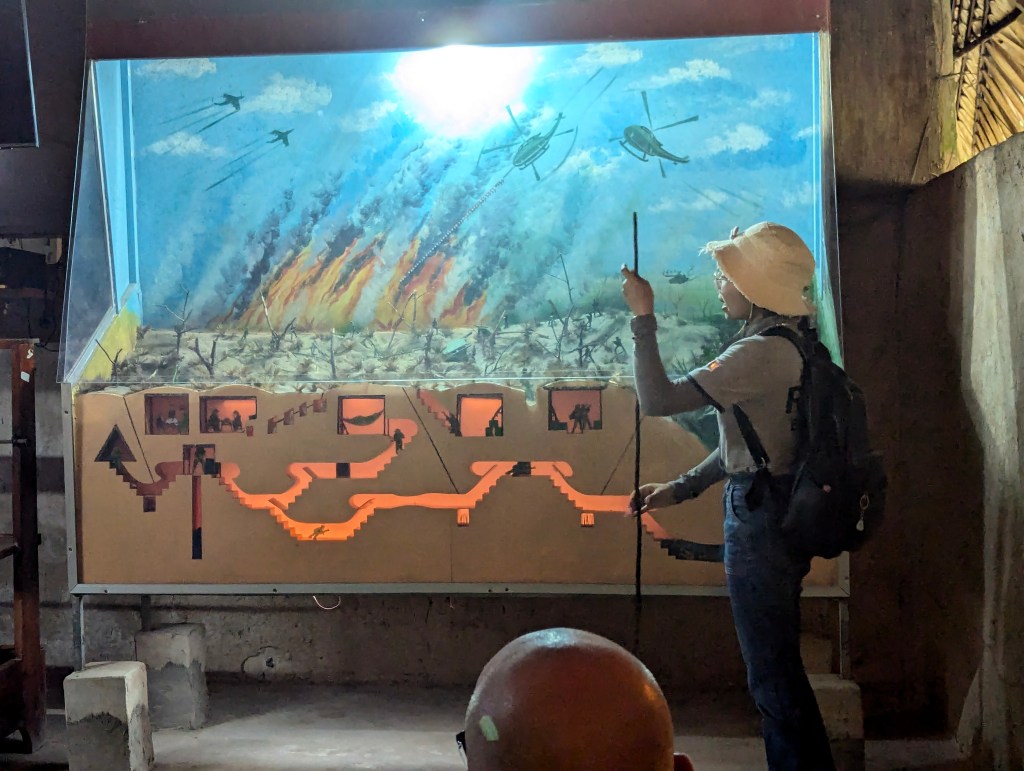
Our main purpose was to visit the Cu Chi Tunnels, an incredible maze of underground tunnels dug by Vietnamese soldiers during their 20-year long war with the USA. For background, The Vietnam War (1954-1975) was a long and complex conflict that pitted the communist government of North Vietnam against a puppet government set up by the USA in South Vietnam. It was a major conflict of the Cold War, which began with France trying to recolonise Vietnam despite it gaining independence in 1954 (there doesn’t seem to be much mention of this on the Internet or Western media but the War Museum in HCMC stated this very clearly). However, France eventually withdrew and the war transformed into an ideological war between Capitalism, with the US and its allies supporting a puppet government set up in South Vietnam, and the Soviet Union backed Communist government of North Vietnam. The war resulted in the death of over 3 million people and future generations were maimed due to extensive chemical warfare used by the US military.
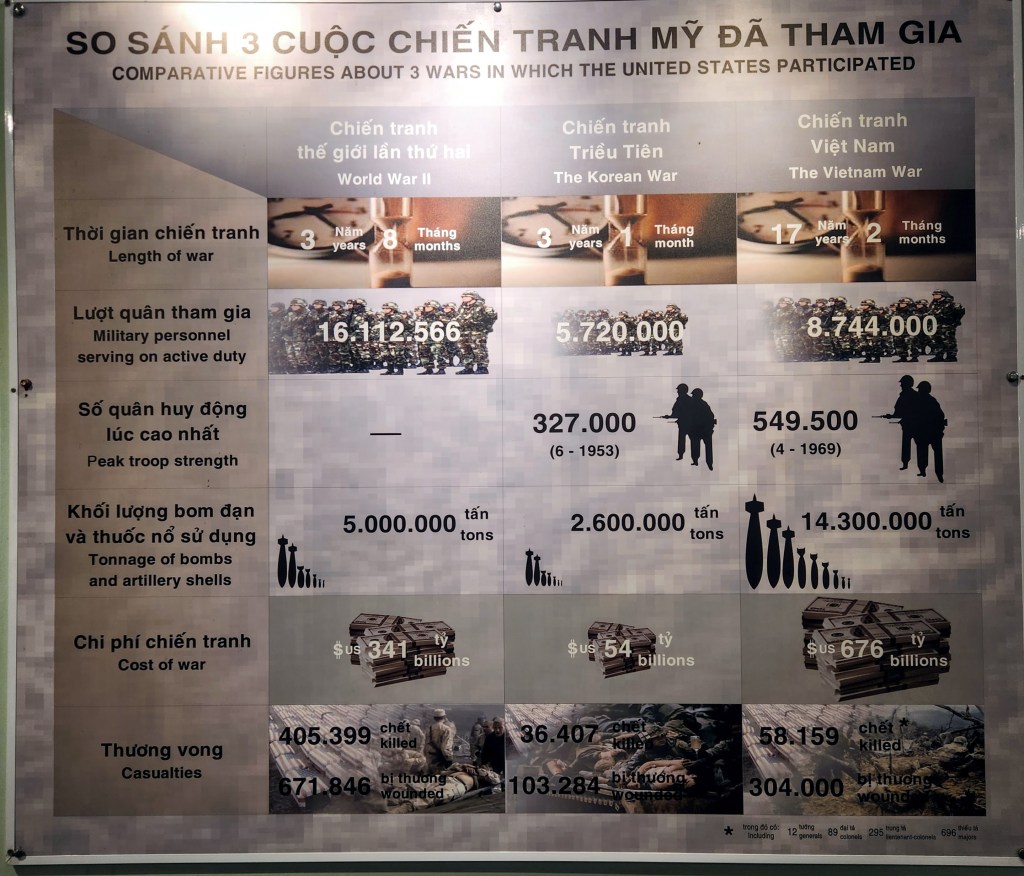
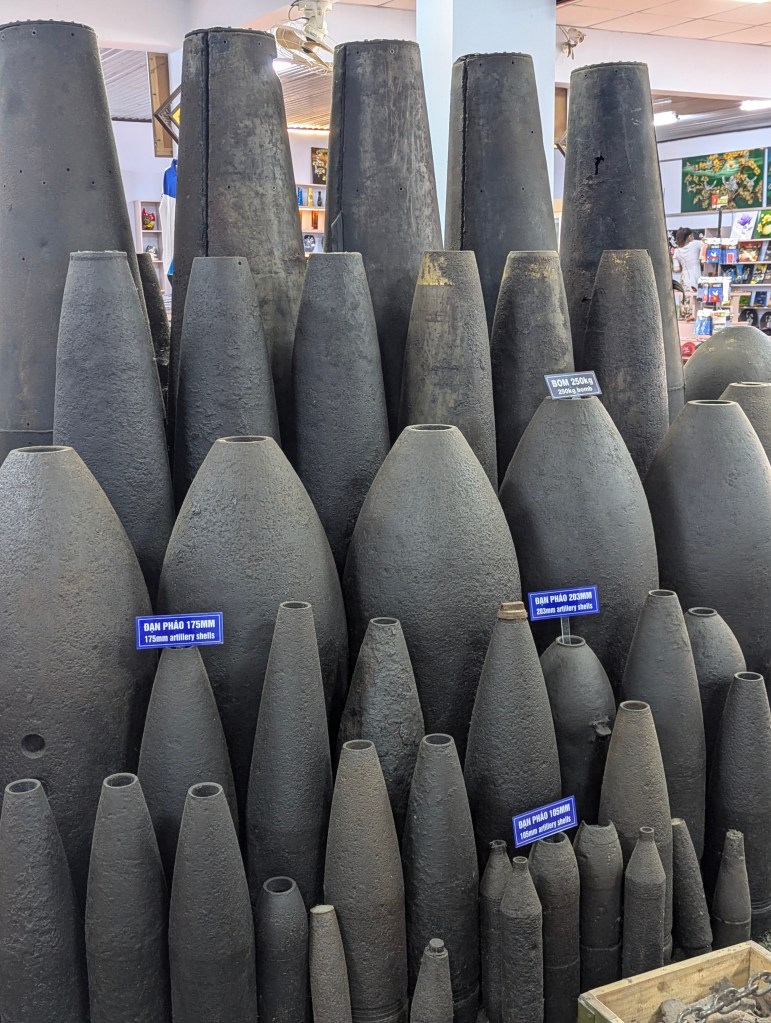
The Vietnam conflict is a complex one because it cost the US double of what World War 2 cost. They dropped three times the number of bombs that they used in the Second World War, all for what eventually was rebelled against and denounced in their own senate.
However, for the Vietnamese, whether this was a war of liberation, independence or civil unrest, can only be argued. But what can not be questioned is the resilience of the people, and the unshakable belief that they were fighting for their very survival. Our tour guide, a young 24-year old girl, proudly stated that her grandfather fought the war in Cu Chi, leaving his home in the Mekong Delta and fighting for decades so that future generations like hers could have a country to call home.
The tunnel system is unbelievable. A network of 250 kms of tunnels, with rooms for eating, sleeping, and strategizing, all beneath the ground, all dug by hand. These were not soldiers or warriors. It was a war of peasants. Every Vietnamese house fought long and hard, digging their land, to make this maze of tunnels to avoid the incessant bombing and tanks.

They knew they couldn’t compete with the artillery brought in by the US (and they brought in a fair bit). So they smartened up and used it to their advantage. Bomb shells were recycled and used to handcraft weapons and American army truck tyres transformed into footwear.
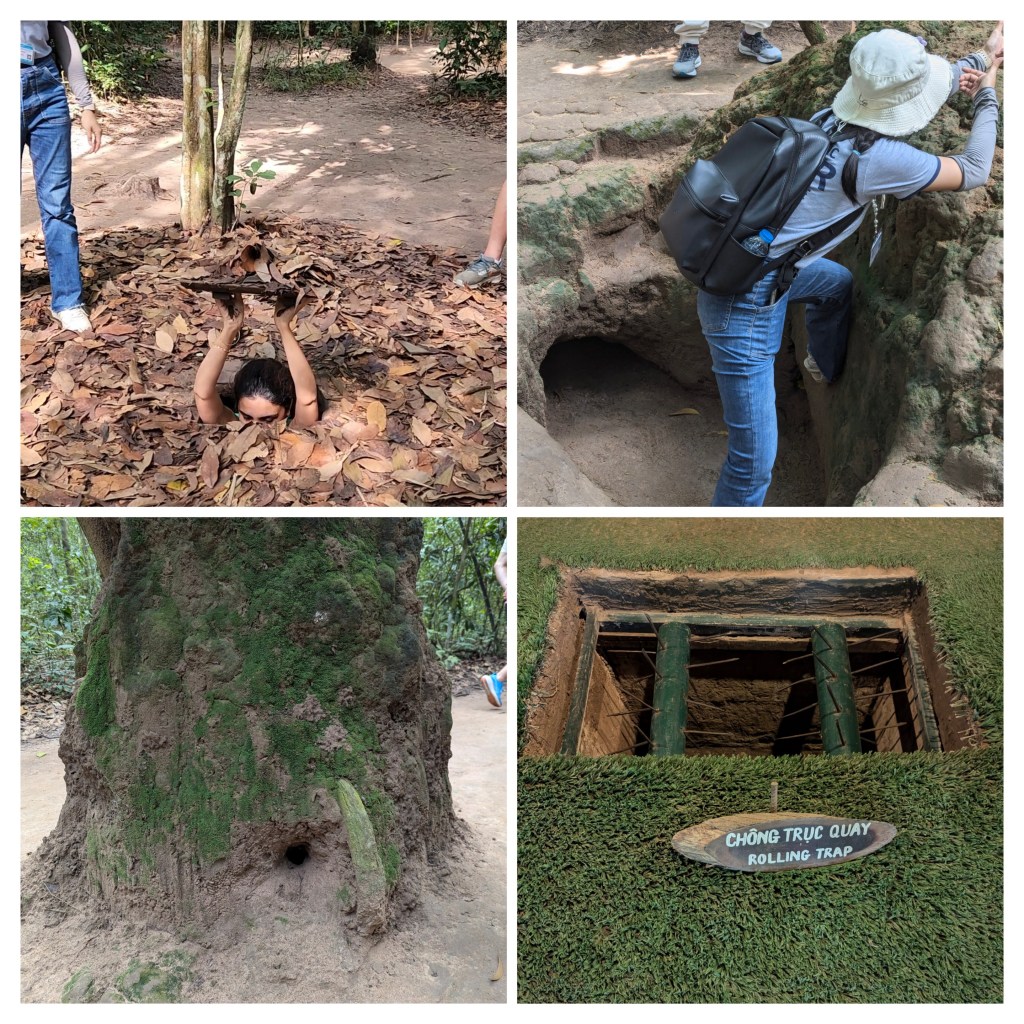
Every little detail was thought through, perhaps a result of much hit and trial. Ventilation was provided in the tunnels by means of thin bamboo sticks, camouflaged under fake termite hills in the jungles. Smoke from the underground kitchens was screened in multiple sections and finally let out as a gentle fog through various outlets. The tunnel systems had traps set for enemy soldiers, and defences such as protection against flooding and other means used by the American army to bring them out of the tunnels.

Visiting Cu Chi Tunnels was a humbling experience. Not so much because of its significance in a hard-fought war, there are plenty of wars fought elsewhere in the world too. But rather, as a symbol of the relentless belief of the common people in Vietnam. From what we witnessed, heard and saw, they would have fought till the end, regardless of whether this war took 20 years for the enemy to retreat, or 100. And for that, one can not help but respect and be in awe of this tiny nation that refused to stand down to a giant or be a pawn to be used in world politics.
 Life In A Million Bites