I’ve always believed that borders are merely artificial lines—arbitrary strokes of ink drawn across maps by people in recent history. That land, people, food, and culture move freely, weaving through these boundaries, softening their edges until they barely matter. But as I look out of the window today, watching the landscape shift dramatically before me, I’m beginning to question that belief.
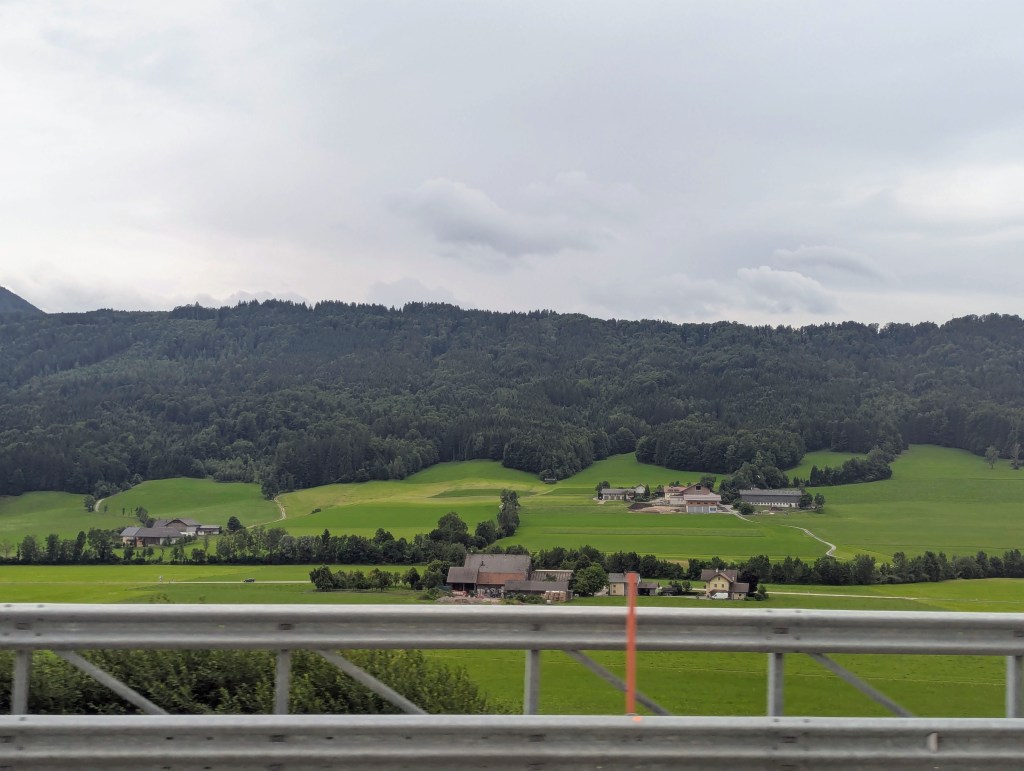
I’m on the road from the storybook village of Český Krumlov in Czechia to the regal Austrian city of Salzburg. One might assume that the countryside would remain indifferent to the border drawn just over a century ago, untouched by politics or bureaucracy. But it doesn’t.

The untamed wilderness of Czechia—once a part of the Austro-Hungarian Empire—yields, almost abruptly, to Austria’s neatly sculpted hills. It’s as if the land itself has taken a side. Austria aligns itself with the precision and orderliness of its Germanic roots, while Czechia embraces a more rugged charm, echoing the soul of Hungary and the romantic wildness of old Bohemia.
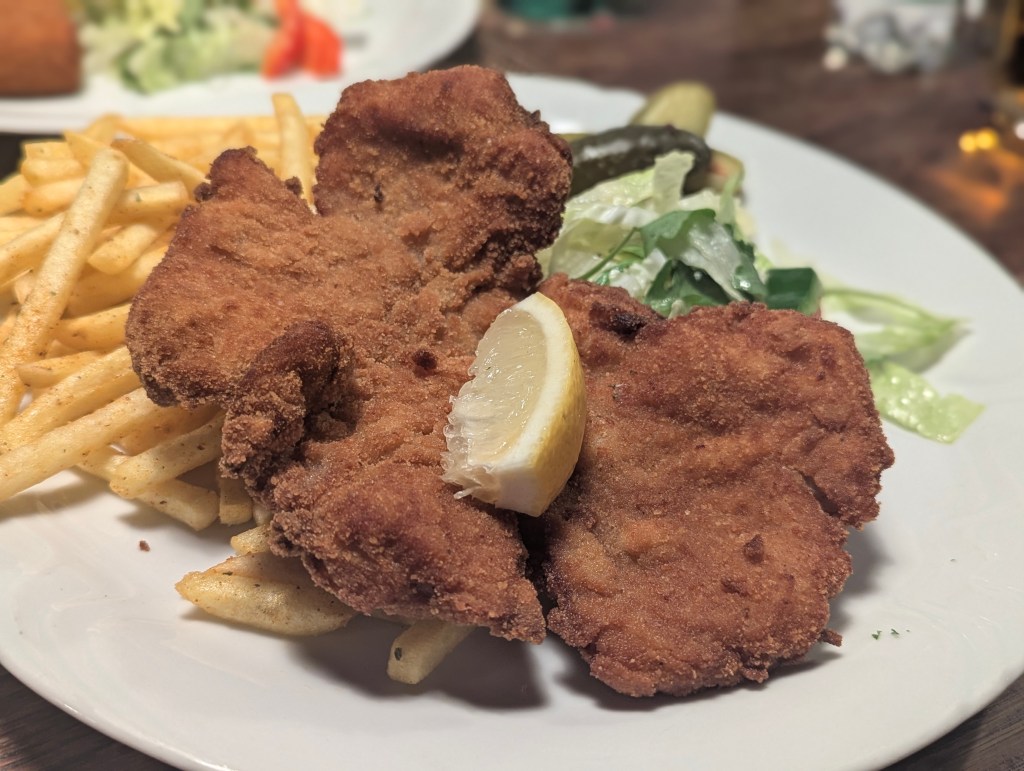
The cuisines of Czechia, Austria, and Germany follow a broadly similar pattern — hearty fare rooted in Central European traditions — yet each brings its own regional flair and cultural influences to the table. One point of culinary contention among the three is the schnitzel, a breaded cutlet that all lay some claim to. While the origins are hotly debated, variations of this beloved dish appear across their menus, each nation adding its own twist such as accompaniments or choice of meat.
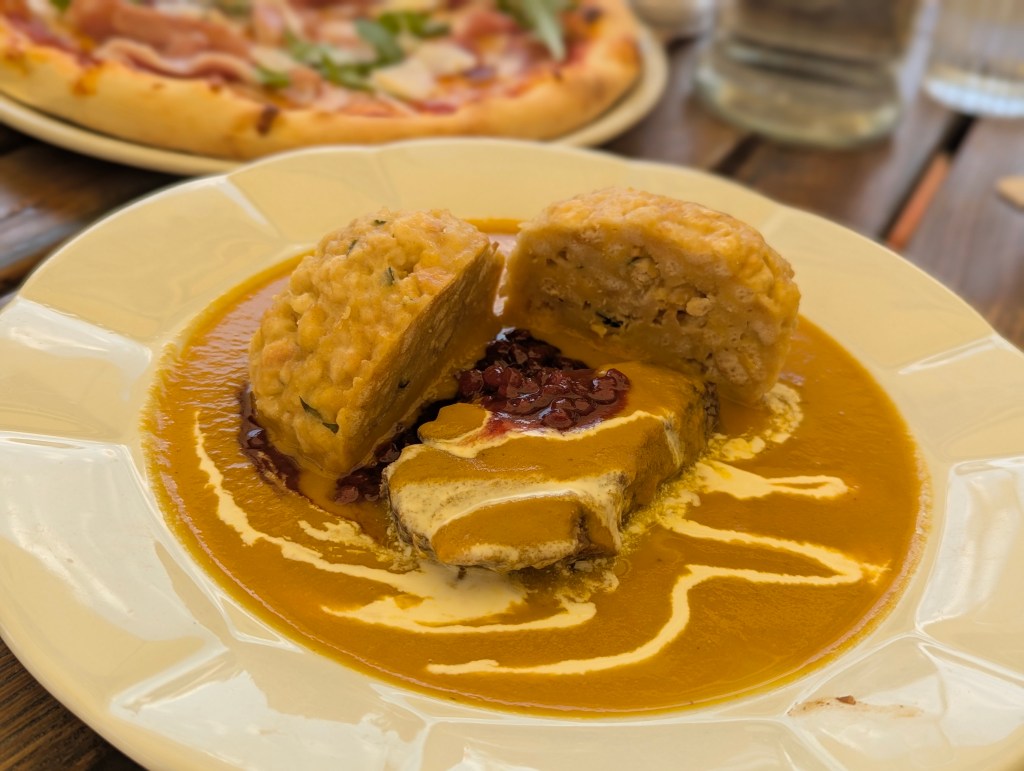
Czech cuisine is rustic and comforting, often centered around meat, gravy, and dumplings. Although dishes like goulash are widely acknowledged as Hungarian in origin, the Czechs have adopted and adapted them, making them staples of their national repertoire. Another signature dish is Svíčková, a marinated beef sirloin served in a creamy sauce, accompanied by cranberry compote and dense bread dumplings. Elements of this dish — the dumplings and cream — suggest influences from Russia and the east, while the omnipresent sauerkraut hints at ties to Germanic traditions.
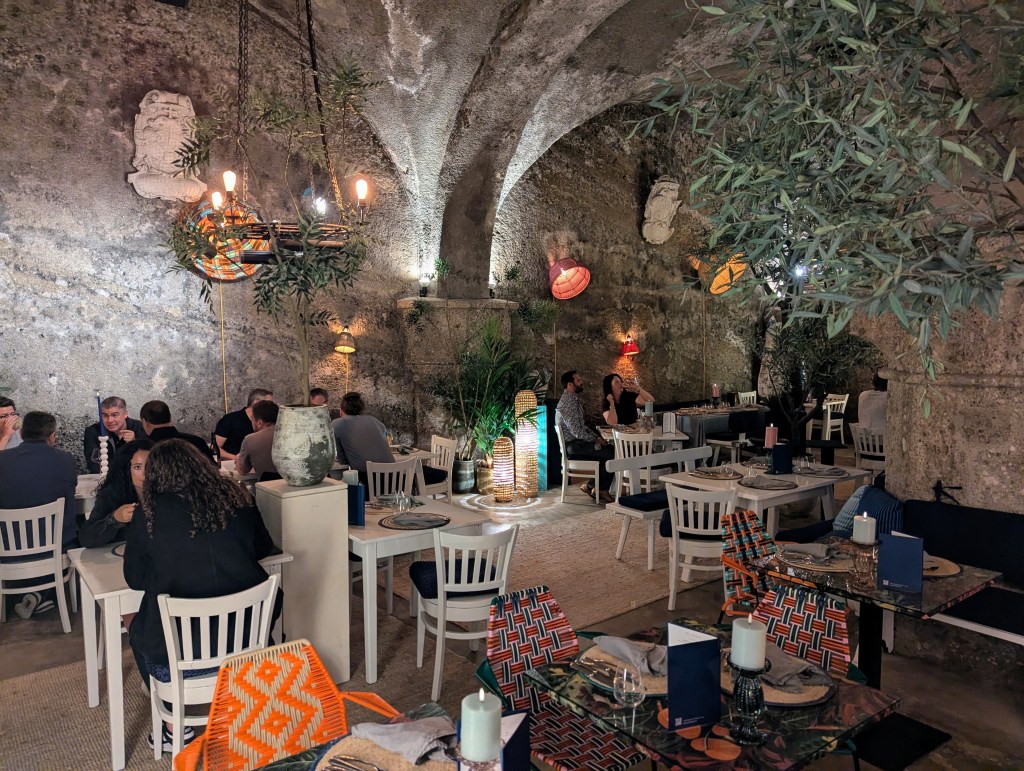
Austrian cuisine, on the other hand, bears the elegant stamp of the Hapsburg Empire. It is refined, often more delicate in flavour and presentation than its Czech or German counterparts. While schnitzel again makes an appearance, it is typically plated with precision and finesse. One delightful Austrian dish is Käsespätzle — a rich, cheesy noodle dish that my daughter loves — which is Austria’s answer to mac and cheese. Interestingly, the Austrian food I’ve sampled in Singapore, particularly from Austrian chef Stephan Zoisl, has often felt more elevated than some of the formal meals I’ve had in Salzburg, suggesting that the cuisine lends itself well to reinterpretation by skilled hands.
German cuisine shares many similarities with its neighbours but tends to be more robust and meat-focused. Pork is dominant, and sausages of all varieties — bratwurst, weißwurst, currywurst — are national treasures. No sausage in the world can beat a German bratwurst from a street-side food truck, though the lack of variety in the menu beyond sausages and potatoes does get boring after a few days.
Sauerkraut and potatoes feature heavily, always with a shot of mustard. Breads are aplenty, especially pretzels, with a sprinkling of salt. The best pretzels I have ever eaten came hot off the oven in a tiny village in Germany called Adelsheim, in a bakery that sold out by 7:30am!
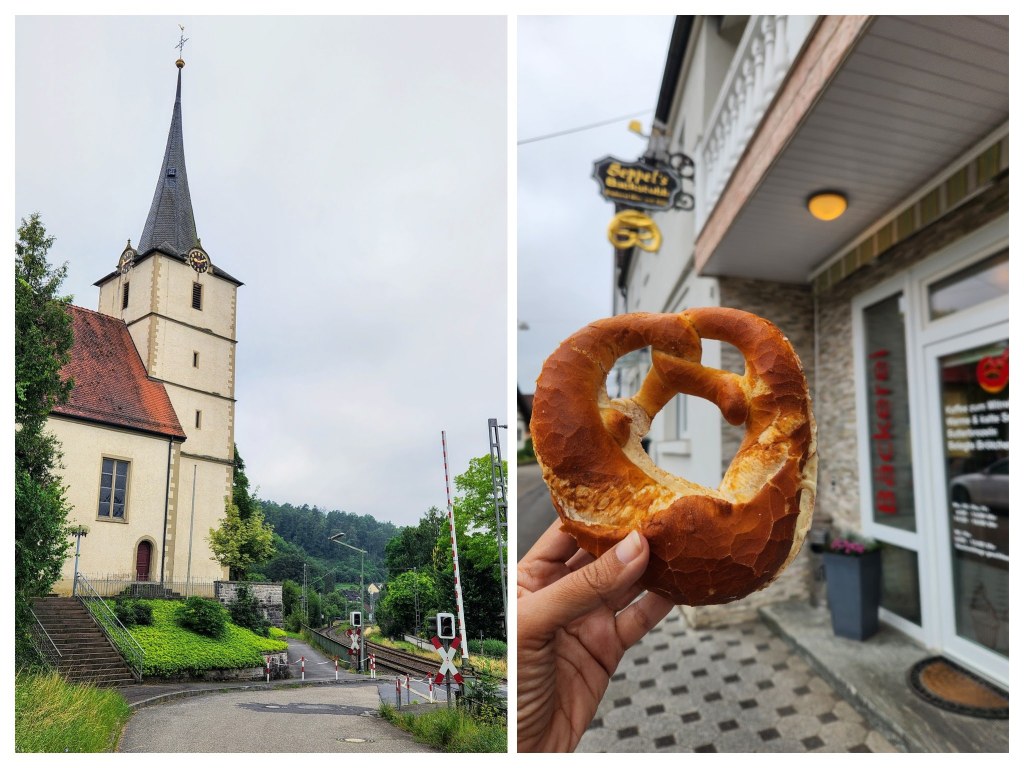
Portions in German food are often generous, and the food leans more towards practicality than polish. Unlike Austria’s imperial finesse or Czechia’s comforting heartiness, German cuisine can feel more straightforward and bold
While the borders blur in terms of ingredients and techniques, there are subtle but telling differences: Czech food is warming and homely, Austrian food carries a certain old-world grace, and German food is bold and direct. Together, they paint a rich and flavourful portrait of Central Europe’s shared but distinct culinary heritage.
 Life In A Million Bites